Architecting Autonomous SecOps: Cortex AgentiX
Adversaries are leveraging AI to accelerate attack lifecycles, driving exfiltration times down by up to 4X. In some cases, the time from a CVE announcement to active scanning is as low as 15 minutes. Traditional security automation relies on deterministic playbooks that are reliable but highly inflexible. Cortex AgentiX addresses this by embedding agentic AI natively into XSIAM, Cloud, and XDR to deploy a governable autonomous workforce.
The Automation Spectrum
AgentiX shifts Security Orchestration, Automation, and Response (SOAR) from rigid workflows to a spectrum of autonomous reasoning.
- Standard Playbooks: Handle routine, alert-triggered sequences like indicator extraction, basic remediation, and ticketing.
- AI-Embedded Playbooks: Embed dynamic AI tasks within deterministic workflows. LLMs can execute specific nodes, such as summarizing sandbox reports or deciding if risk is high at a decision fork.
- Autonomous AI Agents: Context-aware agents that do not follow pre-scripted paths. They operate on a continuous loop of "Plan, Think, Execute" to fulfill complex prompts.
Purpose-Built Agents and Native MCP
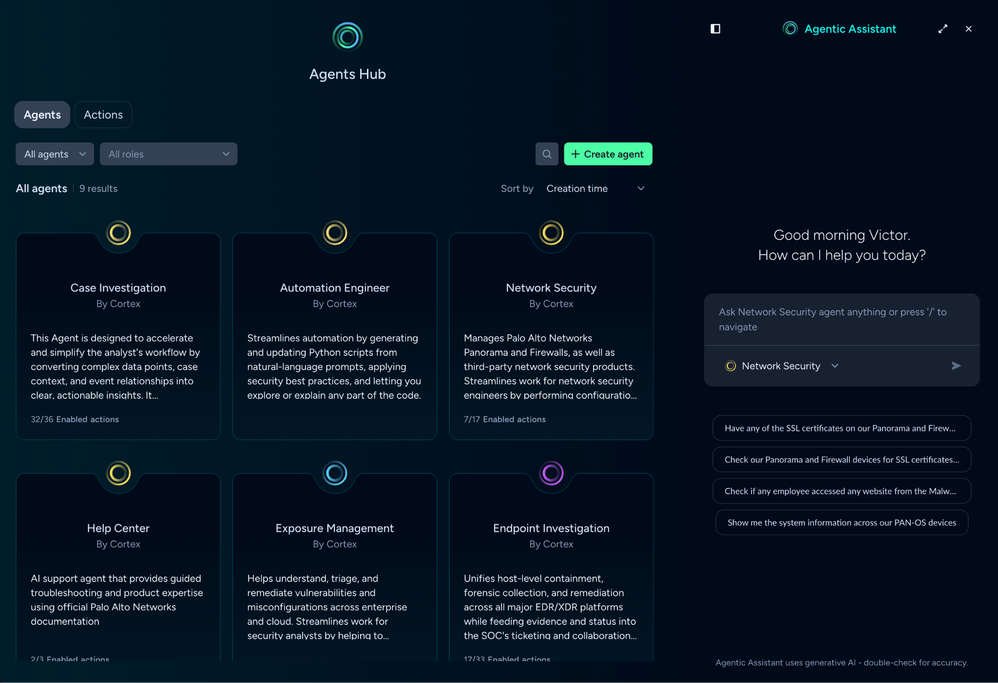
AgentiX relies on specialized, domain-specific agents rather than a single monolithic model.
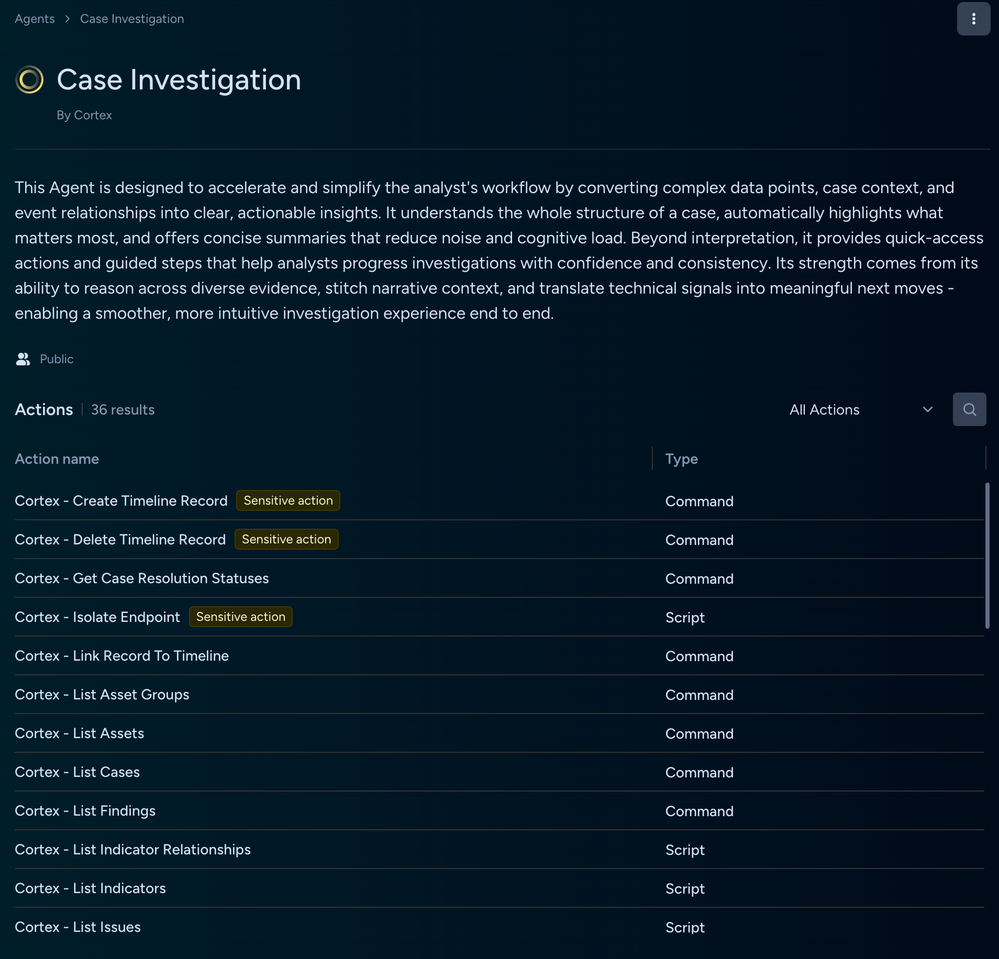
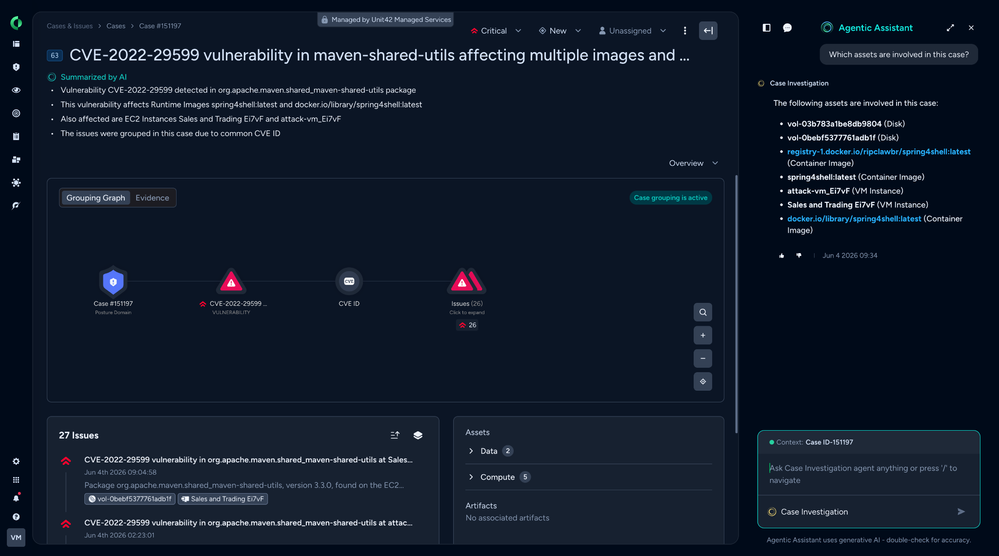
- Case Investigation Agent: Correlates diverse evidence, stitches narrative context, and translates technical signals into guided investigation steps.
- Threat Intel Agent: Scrapes external threat data, extracts and enriches indicators of compromise (IOCs), and actively checks for sightings within the tenant environment.
- Automation Engineer Agent: Translates natural language prompts directly into executable Python scripts. It includes built-in debugging to validate generated code before deployment.
- Network Security Agent: Automates configuration checks, policy optimization, and vulnerability assessments across Palo Alto Networks Panorama and third-party firewalls.
A core architectural component of this ecosystem is the Model Context Protocol (MCP).
- MCP is a standardized protocol allowing AI models to communicate directly with external tools and datasets, minimizing custom integration maintenance.
- It enables users to query XSIAM using natural language.
- The protocol interfaces with over 1,000 prebuilt third-party integrations.
Enterprise-Grade Guardrails
The primary engineering risk with agentic AI is unpredictable execution. AgentiX enforces a strict governance model to ensure safety and auditability.
- Inherited Permissions (RBAC): Agents are bound by the exact roles and permissions of the invoking user. If a user cannot execute a command, the agent cannot either.
- Strict Action Scoping: Agents are programmatically restricted to a defined list of tasks and cannot improvise outside of their approved bounds.
- Human-in-the-Loop Safeguards: High-impact execution commands, such as host isolation or firewall rule deletion, automatically pause and require manual human approval before execution.
- Zero-Training Data Policy: Customer data and user prompts are strictly isolated and never utilized to train the underlying models.
- Auditability: Every action, interpreted input, and planned step an agent generates is logged in the case notes for full transparency.